What Factors Affect the Cost of Installing or Replacing Concrete?
Wondering what truly shapes concrete installation cost in Blacklick? The short answer is that your total investment reflects your site, your goals, and the craftsmanship you choose. If you are comparing options for a driveway, you can review our concrete driveways page while you read. This guide explains the real-world factors homeowners around Blacklick, Jefferson Township, and nearby Gahanna and Reynoldsburg should consider.
How Size, Layout, and Access Shape Your Budget
Square footage is the starting point, but layout and access often move the needle. A straight, standard-width driveway is simpler than a wide parking pad with curves, a turnaround, or decorative borders. Tight lots in neighborhoods like Blacklick Ridge can limit truck access, which affects how materials and equipment reach the work area.
Driveway replacement adds logistics, such as breaking up the old slab and staging haul-off. Cul-de-sacs and narrow streets mean more coordination for dumpsters and deliveries. If the crew must wheel material from the street or use smaller equipment, production slows, and labor rises.
What Lies Beneath: Site Conditions and Soil Prep
Central Ohio is known for heavy clay that holds water. That soil type expands and contracts with the seasons. A stable base is critical so your slab does not settle or crack prematurely. Do not skip proper base prep because it supports the slab for years to come.
- Subgrade quality: Soft spots, organics, or old fill require undercutting and compacted aggregate.
- Drainage: Redirect downspouts and surface water so it flows away from the concrete.
- Slope: Proper pitch helps prevent puddles and winter ice patches.
- Utilities and roots: Shallow lines or mature trees may call for careful rerouting or root mitigation.
Blacklick’s freeze-thaw cycle means moisture under the slab can expand when temperatures drop. A well-compacted base, the right aggregate depth, and good drainage help the slab ride out winter without damage. If your project includes sidewalks or a new concrete slab for a backyard shed, expect the contractor to evaluate each area separately based on soil and runoff.
For a broader look at services that support site preparation and planning, browse our concrete services overview to see how related work fits together.
Concrete Mix, Thickness, and Reinforcement Choices
The mix design must match the job. Driveways, patios, and walkways face different loads and exposures. In Blacklick, mixes are often specified for durability in freeze-thaw conditions, and your concrete contractor may recommend air entrainment to help protect against winter stress.
Thickness and reinforcement also matter. Driveways usually need more thickness than a garden walkway, and high-traffic areas near the street may warrant extra strength. Options include fiber-reinforced mixes, welded wire mesh, or rebar in high-stress zones. Thickness and reinforcement are not the place to cut corners because they directly affect long-term performance.
Control joints help manage where minor shrinkage cracks appear. Placement and spacing are part of a smart plan, not an afterthought. Clean, straight saw cuts at the right time reduce the chance of random cracking that can spoil curb appeal.
Finishes and Curb Appeal Upgrades
Finish selection changes both look and workmanship time. A broom finish is practical and slip-resistant for our snowy winters. Exposed aggregate, stamped textures, or integral color add style and coordination with your home’s exterior.
Details like picture-frame borders, decorative saw cuts, or integral color bands add labor. Edge treatments near garage doors, porches, and steps also take time to form and finish. If you are pairing a driveway replacement with concrete patio installation, matching finishes can create a connected look from the front walk to the backyard.
Removal, Haul-Off, and Replacement Variables
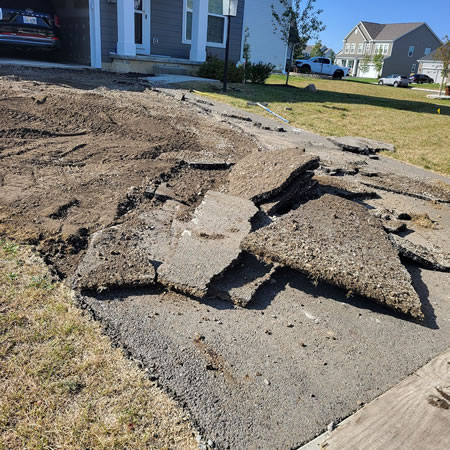
Concrete replacement cost is shaped by demolition method, thickness of the old slab, and how accessible the debris is for loading. Replacing a failed section that was too thin or lacked reinforcement can take longer if the slab fractured unevenly. Add-ons like removing buried pavers or cutting around utility boxes can also extend the schedule.
If your driveway ties into a public sidewalk or apron area, the crew may need precise saw cuts and formwork to transition cleanly. Every replacement is unique, so plan for a short site walk with your estimator to capture the real conditions. For a company-wide overview where you can learn more about concrete installation cost and process expectations, start at our home base.
Timing, Weather, and Scheduling in Central Ohio
Season matters in Blacklick. Spring and fall provide comfortable curing conditions, while hot midsummer days can speed up set times. In chillier months, crews may need special measures so concrete gains strength properly. Scheduling around leaf drop, early freezes, and wet spells protects the surface and keeps the finish consistent.
Curing is key. Concrete gains strength over time, and early heavy loads can cause damage. Sealers, when recommended, help resist moisture and winter salts. Avoid deicing salt during the first winter because young concrete is more vulnerable to chemical damage.
Local tip: In Blacklick and greater Franklin County, freeze-thaw swings can be hard on flatwork. Ask your contractor about drainage, air-entrained mixes, and joint layout to reduce winter stress. A little planning now helps your driveway ride out the cold months with fewer headaches.
Driveway Replacement vs. New Concrete Slab
New construction and replacement follow different playbooks. A new concrete slab for a patio or garage starts with grading and base prep, then forms, reinforcement, and a fresh pour. Replacement begins with careful demo, protection of adjacent features, and a strategy to tie into existing walks or steps without awkward height changes.
Driveway replacement often involves correcting the issues that caused the old slab to fail. That could be poor drainage, inadequate base, or an undersized thickness. Fixing these root causes is how residential concrete services deliver long-term value rather than a short-term patch.
If you are weighing patio work at the same time, combining schedules can reduce mobilizations and keep your property disruption to a minimum. For design consistency, consider using the same finish on the front walk and back patio. When you are ready to see materials and options, it helps to compare them alongside the information on concrete driveways so the whole project pulls together smoothly.
How Crew, Equipment, and Staging Influence Outcomes
Production affects cost and quality. A well-sized crew with the right equipment can place, finish, and cure on schedule, which often leads to better surface quality. Tight access, long wheelbarrow runs, or last-minute changes slow everyone down and may require extra labor to keep the pour on track.
Staging matters in neighborhoods like Waggoner Park where street parking is limited. Coordinating delivery windows, setting up safe pedestrian routes, and protecting nearby landscaping take planning. Thoughtful staging makes the workday safer and the final product cleaner.
Permits, Inspections, and Neighborhood Standards
Rules vary by jurisdiction and by project type. Some work requires approvals or inspections, especially when connecting to public sidewalks or modifying drainage patterns. Your contractor can explain what applies to your property and work with you to keep the project compliant without surprises.
Homeowners’ associations may have standards on finishes or widths. Bring those guidelines to your consultation so the plan aligns with neighborhood expectations. This avoids rework and keeps the project moving.
Materials, Additives, and Weather Protection
Concrete mixes can include additives that help with setting time, workability, or cold weather performance. In the shoulder seasons around Blacklick, accelerating admixtures or heated water may help meet schedule and strength goals. Windbreaks, curing blankets, or shade tents can also protect the surface on extreme days.
Sealers and joint sealants are often recommended for driveways and walks that see winter salt. Ask about maintenance schedules and the type of sealer that fits your finish, whether broom, stamped, or exposed aggregate. Keeping up with maintenance preserves appearance and function year after year.
Ways a Local Concrete Contractor Controls Your Total Investment
Even though every home is unique, there are proven ways to deliver value without sacrificing durability. Here are efforts that help manage the overall scope:
- Right-size the layout to match vehicles and turning paths without overbuilding.
- Direct water away from slabs with smart grading and downspout routing.
- Select mix, thickness, and reinforcement that fit the load, not a one-size-fits-all approach.
- Stage equipment and crews for your lot so the pour happens efficiently.
- Plan maintenance with sealing schedules that fit Ohio winters.
These steps are part of professional concrete pouring services that focus on long-term performance, not just the day of the pour. Always get a written scope from your concrete contractor so expectations and responsibilities are clear.
Setting Expectations for Patios, Walkways, and Steps
Front walks, backyard patios, and entry steps live different lives than driveways. They face foot traffic, ice melt, furniture, and grill heat. While they may use the same family of materials, details like joint spacing, edge protection, and finish texture should reflect how you use the space.
For example, a patio that hosts family gatherings might benefit from a slightly richer texture for grip, while front steps need careful nosing and even risers for safety. Coordinating these choices across all flatwork keeps your property feeling consistent and welcoming.
Get a Clear, Local Estimate in Blacklick
Every property in Blacklick is different, and the best way to understand concrete installation cost is a site visit. The team at Gaddis & Son, Inc. will evaluate access, soil, drainage, layout, finishes, and timing, then provide a clear written scope. If you want help planning driveway replacement or a new patio, call 614-252-3109 or explore options for concrete driveways before we meet.